

AI Model Pricing Comparison 2026
Claude and Gemini API prices per million tokens, plus what 1,000 chats cost on each. Gemini 4 Carbon doubles on 1 December 2026. Checked 19 Nov.
By Muhammad Shahbaz · · 6 min read
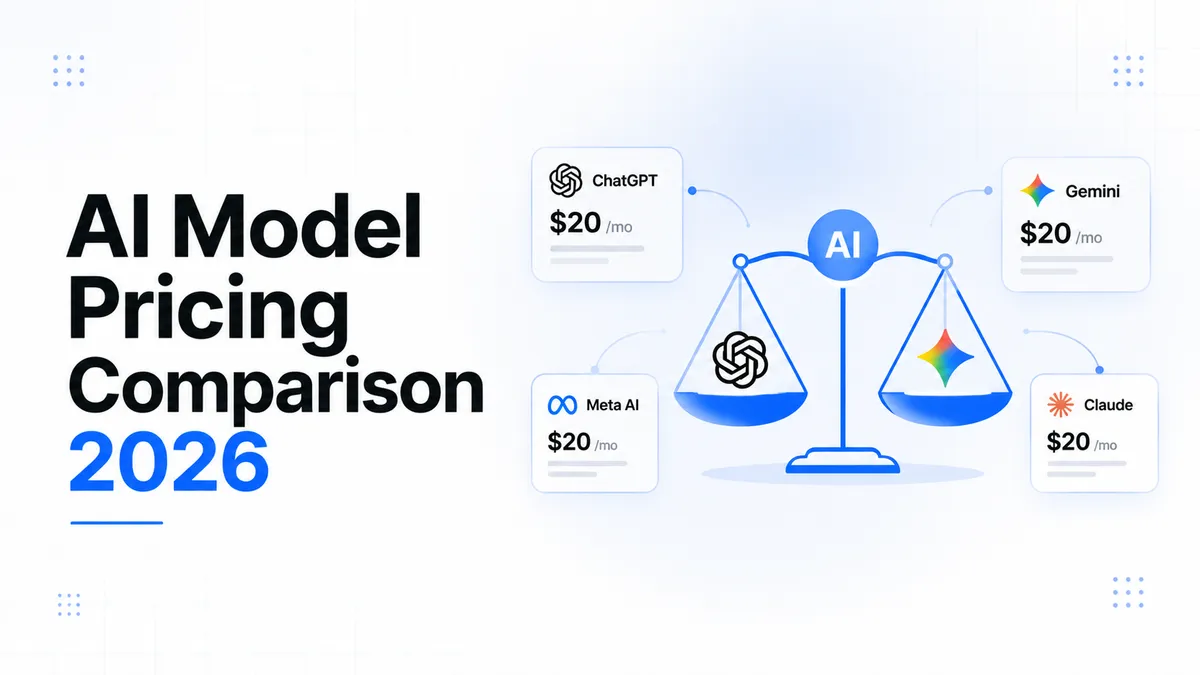
Short answer: For 1,000 business chats (assumed: 2,000 input tokens and 500 output tokens each), API cost on 19 November 2026 runs from about $0.45 on Claude Haiku 5.5 to $36 on Claude Fable 5.2. Gemini 4 Carbon and Argon cost $9 today, then $18 from 1 December 2026.
Prices come from the vendors' own pricing pages, opened on 19 November 2026. Prices change, so check the linked page before you budget.
Key points
- Prices below are US dollars per 1 million tokens, standard tier.
- Gemini 4 Carbon and Gemini 4 Argon double on 1 December 2026. Gemini 3.8 Flash doubles on 1 January 2027.
- The model is only one part of an automation bill. Build, hosting, message fees and human review are separate.
- We did not verify OpenAI prices (their pricing page blocked our check), so they are not in the tables.
How much does the Claude API cost per million tokens?
Anthropic lists these standard prices on its pricing page:
| Model | Input | Output | Best for |
|---|---|---|---|
| Claude Haiku 5.5 | $0.10 | $0.50 | High volume work, summaries, simple chat |
| Claude Sonnet 5.5 | $2 | $10 | Coding and agents, everyday business tasks |
| Claude Opus 5.5 | $4 | $20 | Agentic coding and enterprise work |
| Claude Fable 5.2 | $8 | $40 | Long running agents, the hardest tasks |
Haiku 5.5 prices above apply to prompts up to 100K tokens. Longer prompts cost more ($0.50 input, $2.50 output). Batch processing saves 50%. US only inference costs 1.1 times the listed price.
For a plain-language version of Claude plans and models, see our guide on what Claude AI costs a business.
How much does the Gemini 4 API cost?
Google lists these paid tier prices on the Gemini API pricing page:
| Model | Input | Output | Note |
|---|---|---|---|
| Gemini 4 Carbon | $2 now, $4 from 1 Dec 2026 | $10 now, $20 from 1 Dec 2026 | Most capable, no free tier |
| Gemini 4 Argon | $2 now, $4 from 1 Dec 2026 | $10 now, $20 from 1 Dec 2026 | Faster, lower token use than Carbon, no free tier |
| Gemini 4 Neon | $3 | $15 | No free tier |
| Gemini 4 Hydrogen | $1.50 | $7.50 | Has a free tier |
| Gemini 3.8 Flash | $0.75 until 31 Dec 2026, then $1.50 | $3.75 until 31 Dec 2026, then $7.50 | Has a free tier |
Gemini bills thinking tokens as output, so the real output count can be higher than the visible answer.
Is the Gemini 4 Carbon price going up?
Yes. Google's page says Carbon and Argon cost $2 input and $10 output through 30 November 2026, then $4 and $20 from 1 December 2026. Gemini 3.8 Flash follows the same pattern on 1 January 2027. If you plan a chatbot on these models, budget for the higher price.
What do 1,000 chats cost on each model?
Assumption (ours, not a vendor figure): each chat uses 2,000 input tokens and 500 output tokens. That is 2 million input and 0.5 million output tokens per 1,000 chats. Your own chats may be shorter or longer.
| Model | 1,000 chats today | After the price change |
|---|---|---|
| Claude Haiku 5.5 | $0.45 | no change listed |
| Gemini 3.8 Flash | $3.38 | $6.75 from 1 Jan 2027 |
| Gemini 4 Hydrogen | $6.75 | no change listed |
| Claude Sonnet 5.5 | $9 | no change listed |
| Gemini 4 Carbon or Argon | $9 | $18 from 1 Dec 2026 |
| Gemini 4 Neon | $13.50 | no change listed |
| Claude Opus 5.5 | $18 | no change listed |
| Claude Fable 5.2 | $36 | no change listed |
Math: input millions x input price + output millions x output price. Example for Sonnet 5.5: 2 x $2 + 0.5 x $10 = $9.
Which AI model is the cheapest for a business chatbot?
On token price alone, Claude Haiku 5.5 is the cheapest in these tables at about $0.45 per 1,000 chats under our assumption. Cheapest is not the same as right. A small model can give a wrong answer to a refund or delivery question, and that costs more than the tokens saved.
Our method: take 50 real past customer questions, run them on two models, and count the correct answers, the wrong ones and the ones that should go to a person. Then compare cost per correct answer, not cost per token.
Claude Opus 5.5 vs Sonnet 5.5: which one should you pay for?
Opus 5.5 costs twice as much as Sonnet 5.5 on both input and output ($4 and $20 against $2 and $10). Start with Sonnet 5.5 for everyday work and move up only on tasks where it fails your own test set. We have not benchmarked them against each other, so this is a method, not a ranking.
What else is in an AI automation bill?
Token cost is usually the smallest line. A real project also has the build, hosting, WhatsApp or SMS message fees, monitoring and a person who reviews the hard cases. For published prices of the work itself, see our AI automation cost guide and what a $700 audit includes. If you want a chatbot priced for your case, start at our chatbot service or the pricing page.
What we did not check
- OpenAI model prices: the pricing page returned an error to our check. Open it yourself before comparing.
- Prices are in US dollars. We did not check local taxes, card fees or currency conversion for Pakistan.
- Model quality. This post compares price only.
- Free tier limits for Gemini 4 Hydrogen and Gemini 3.8 Flash. Read Google's page for the current limits.
Disclosure: Stuck Media Solutions uses Claude in its own work. We earn nothing from Anthropic or Google when you pick a model.
Sources: Anthropic pricing, Anthropic news, Google Gemini API pricing. All opened 19 November 2026.
Next step: Not sure which model fits your workflow? Tell us what is stuck and we will start with a $700 automation audit.
- ai model pricing comparison
- gemini 4 price
- claude api pricing
- claude opus 5.5 price
- gemini api pricing
- ai api cost
- cheapest ai model
FAQ
Questions on this topic. Answered.
Which AI model is the cheapest for a business chatbot?
On token price, Claude Haiku 5.5 ($0.10 input, $0.50 output per million tokens) is the cheapest in our comparison, about $0.45 per 1,000 chats under our assumption of 2,000 input and 500 output tokens per chat. Test it on 50 of your own customer questions before choosing, because a cheap wrong answer costs more than it saves.
How much does the Gemini 4 API cost?
Google lists Gemini 4 Carbon and Argon at $2 input and $10 output per million tokens through 30 November 2026, then $4 and $20 from 1 December. Gemini 4 Neon is $3 and $15. Gemini 4 Hydrogen is $1.50 and $7.50.
Is the Gemini 4 Carbon price going up?
Yes. Google's pricing page says the price doubles on 1 December 2026, from $2 and $10 to $4 and $20 per million input and output tokens. Gemini 3.8 Flash doubles on 1 January 2027.
How much does the Claude API cost per million tokens?
Anthropic lists Haiku 5.5 at $0.10 input and $0.50 output, Sonnet 5.5 at $2 and $10, Opus 5.5 at $4 and $20, and Fable 5.2 at $8 and $40. Batch processing saves 50%.
What is the price of Claude Opus 5.5?
$4 per million input tokens and $20 per million output tokens on Anthropic's pricing page, checked on 19 November 2026. For 1,000 chats of 2,000 input and 500 output tokens that is about $18.
How do I calculate AI API cost for my business?
Count the input and output tokens of a typical chat, multiply by the price per million tokens, then multiply by your monthly chat volume. Add message fees, hosting and human review, which are separate from the model price.
Do these prices include tax or Pakistani rupee conversion?
No. The vendors list prices in US dollars. We did not check taxes, card fees or exchange rates.
Comments
Questions or thoughts? Leave a comment.
Keep reading
More from the blog on similar topics
 AI Automation
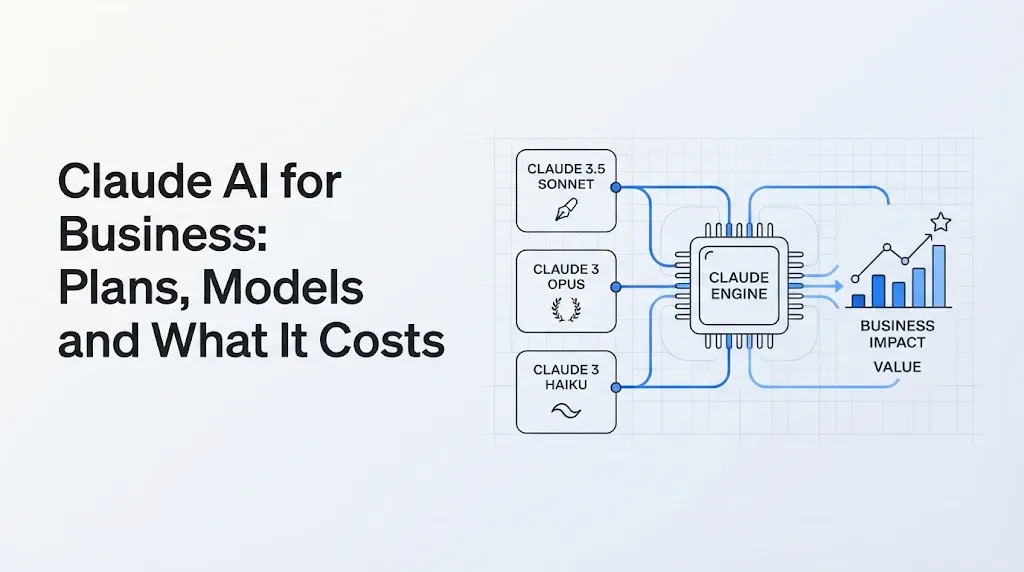
What Claude AI is, which plan or model fits a small business, and what it costs in November 2026. Prices from Anthropic's own pages, with a worked example.
· 9 min read
 AI Automation
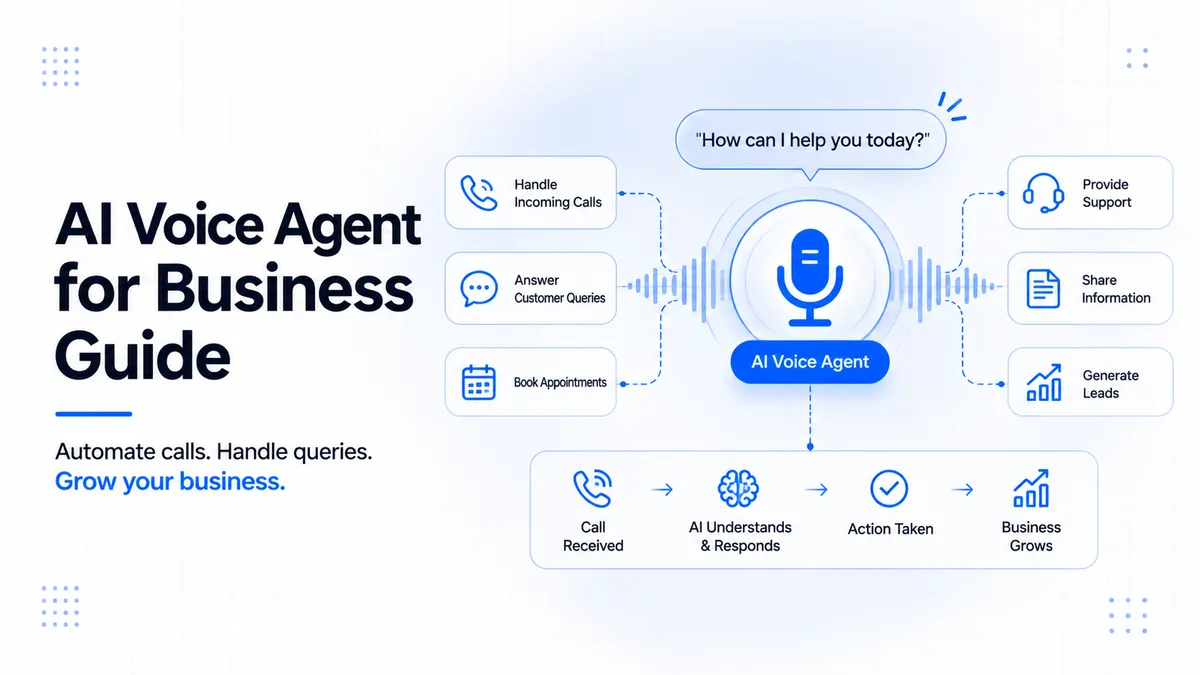
What an AI voice agent is, where it fits, its limits, hand-off to a human, US consent basics and how to start.
· 5 min read
 AI Automation
A plain explanation of a fixed price automation audit: process mapping, tool inventory, ranked opportunities, a build estimate and a 7 day timeline.
· 3 min read
Tell us what’s stuck. We’ll show you what to automate first.
A 30-minute call with the engineer who would build it. You leave with a clear next step, whether or not we work together. We reply within one working day.