ERP Cost for Wholesale Business in Pakistan
What does ERP software actually cost in Pakistan? Real pricing, implementation costs, and an honest answer on whether your wholesale business needs one yet.
ERP for Wholesale Business in Pakistan: What It Actually Costs (And Whether You Even Need One Yet)
The answer is ERP software for a small wholesale business in Pakistan typically costs between PKR 5,000 and 15,000 per month for off the shelf cloud options, PKR 20,000 to 50,000 per month for mid size setups, and PKR 50,000 or more for custom built or enterprise systems. Implementation adds a separate one-time cost, often PKR 100,000 to 500,000 depending on how much of your existing data and workflow needs to be migrated. Not every wholesale business needs one yet. If you're running fewer than a few hundred transactions a month and one person can still track inventory accurately, you may be better off waiting.
If you sell to shops, deal in bulk, or run any kind of distribution business in Multan, Lahore, or Karachi, you've probably heard the same pitch a dozen times: get an ERP, and your business will run itself. Reports write themselves, stock never runs out unexpectedly, and every order is tracked from the moment it's placed to the moment it's delivered.
Some of that is true. A lot of it is sales talk. This article covers what ERP software actually costs in Pakistan right now, what you get at each price point, and how to tell whether your business is at the stage where it makes sense.
What ERP Actually Means for a Wholesale Business
ERP stands for Enterprise Resource Planning, which is a fairly generic name for something fairly specific: one system that holds your inventory, sales, purchasing, and often accounting, instead of three or four separate tools (or spreadsheets, WhatsApp groups, and a notebook, which is how most Pakistani wholesale businesses actually operate before they switch).
The core promise is that when a sale happens, your stock count updates automatically. When stock runs low, someone gets notified before a customer finds out the hard way. When it's time to close the books, the numbers are already there instead of being rebuilt from receipts.
For a wholesale business specifically, the parts that matter most are usually inventory tracking across multiple locations, order management from dealers or retailers, pricing tiers for different customer types, and basic financial reporting. If you're still mapping out which of these your business actually needs, our guide to digital transformation for wholesale businesses walks through how to prioritize before you spend anything.
What It Actually Costs in Pakistan Right Now
Pricing in Pakistan splits into a few clear tiers, and the range is wider than most people expect.
-
Entry level cloud ERP for small businesses generally runs PKR 5,000 to 15,000 per month. This covers basic sales, purchasing, and inventory modules, usually for a limited number of users. Several local providers operate in this range, built specifically around Pakistani business needs rather than adapted from international software.
-
Mid size setups with more users, more modules, and features like multi-branch support or payroll typically land between PKR 20,000 and 50,000 per month.
-
Enterprise grade or heavily customized systems start around PKR 50,000 per month and can go well beyond that. International options like SAP Business One or Microsoft Dynamics fall into this category, often priced in dollars per user, which converts to significantly more than local alternatives once you add multiple staff accounts.
What most pricing pages don't lead with is implementation cost. Getting your existing data into a new system, training staff, and configuring workflows to match how you actually operate is usually a separate charge, and it can run anywhere from PKR 100,000 to 500,000 depending on how messy your current records are and how much customization you need. If a vendor's quote only mentions the monthly fee, ask directly what implementation costs before you sign anything.
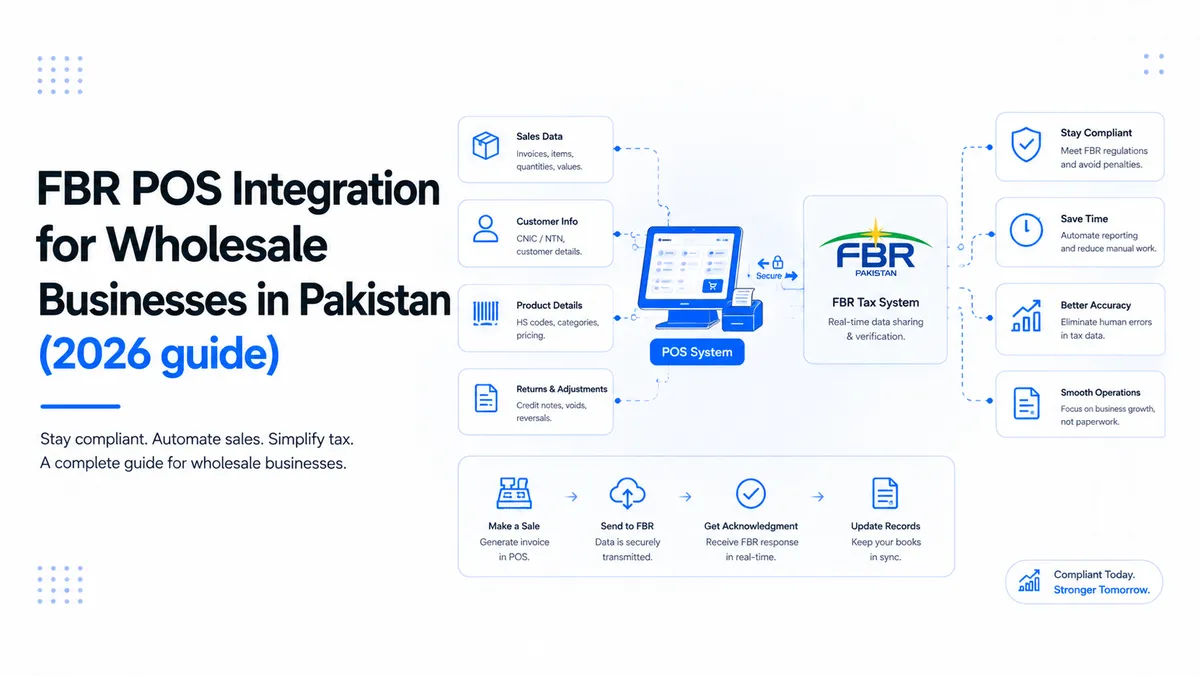
One detail specific to Pakistan that's worth knowing: FBR digital invoicing compliance has become a real factor in ERP selection over the past couple of years. If your business needs to issue FBR compliant digital invoices, confirm this is built in before committing to any system, since retrofitting it later is more expensive than getting it right from the start.
Custom Built vs Off the Shelf: The Actual Trade off
Off the shelf ERP software is faster to get running and cheaper upfront. You're using a system built for hundreds of other businesses, which means the workflow is generic by design. For a wholesale business with fairly standard needs, this is often the right starting point.
Custom software, built specifically around how your business already operates, costs more to build but fits without you having to change your process to match the software. This matters more than it sounds. A lot of businesses buy an off-the-shelf ERP, then spend months trying to force their pricing structure, dealer commission model, or order approval process into a system that wasn't designed for it.
The honest rule of thumb: if your business runs a fairly standard sales and inventory process, off the shelf will save you money and time. If you have unusual pricing tiers, a specific approval chain for large orders, or a workflow that doesn't match how most businesses operate, custom internal software built around your exact process is worth the extra cost, because you'll spend less fighting the system later.
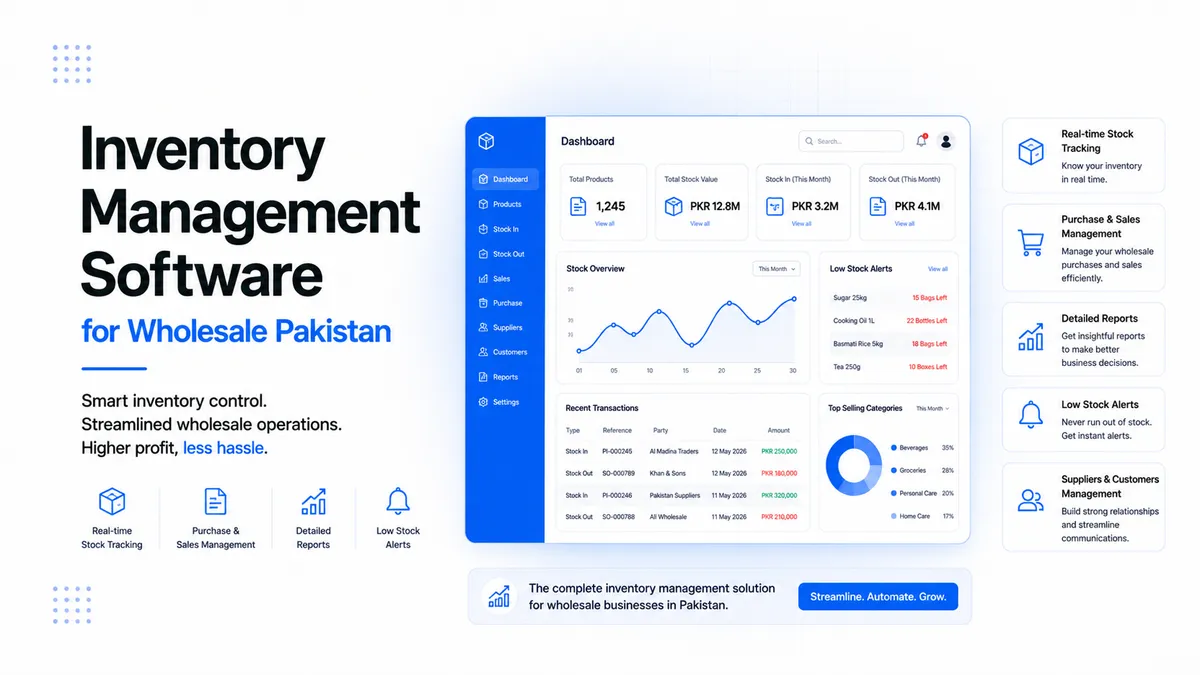
For a deeper look at what to prioritize, see our guide on choosing inventory management software.
Do You Actually Need One Yet
This is the question most ERP content avoids answering honestly, because the honest answer sometimes costs the writer a sale.
-
You probably need one if: you're regularly losing track of stock across locations, closing the books takes days instead of hours, you've had orders go out with the wrong pricing more than once, or you've outgrown what one person can accurately track in their head or a spreadsheet.
-
You probably don't need one yet if: your transaction volume is still low enough that manual tracking is accurate, you're a single location operation with one or two staff handling inventory, or your business model is still changing enough that locking into a system now means rebuilding it in six months anyway.
Buying ERP software too early is a real cost, not just a theoretical one. Businesses that implement before they're ready end up paying monthly fees for a system nobody fully uses, while staff quietly go back to the spreadsheet because it's faster for their actual volume.
How Long Implementation Actually Takes
For a small business with clean existing records, a straightforward off the shelf setup can be running within two to four weeks. For a mid size operation with messier data or specific customization needs, expect one to three months. Complex, multi-branch, or heavily customized systems can take four to six months or longer.
The single biggest factor in how long it takes isn't the software, it's how organized your current data already is. Businesses that go in expecting to clean up years of inconsistent records during implementation are almost always the ones whose timelines slip.
The Bottom Line
ERP software genuinely solves real problems for wholesale businesses once they hit a certain size, and the cost in Pakistan is more accessible now than it was even a few years ago, with solid local options starting well under what international software charges. But it isn't automatically worth it just because your business is growing. It's worth it when the manual system is actually costing you money through errors, lost time, or stock problems, not before.
Before agreeing to anything, get a straight answer on implementation cost, ask specifically about FBR compliance if that applies to you, and be honest with yourself about whether your current process is standard enough for off the shelf software or specific enough to need something custom built.
If you want a second opinion before signing with anyone, book a free 15 minute consultation and we'll give you a straight answer on whether your business is ready, no sales pitch attached.
About the Author
Stuck Media is a knowledgeable contributor sharing expertise and insights on technology and business topics.
Comments
Leave a Comment
Your comment will be reviewed by our team before appearing.
Loading comments...