

Scaling Operations With Automation: A Realistic Playbook
How growing companies can use automation to handle more work without hiring at the same pace. A realistic playbook with McKinsey, IBM and BCG findings.
By Muhammad Shahbaz · · 4 min read
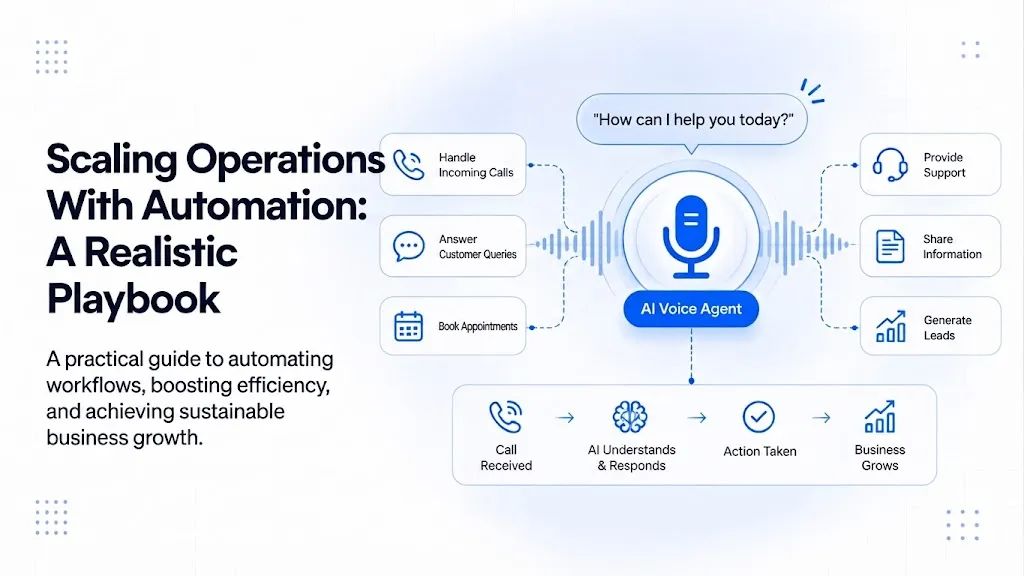
The short answer: Automation can help a team handle more volume without adding people at the same rate, but results vary a lot. McKinsey's 2025 survey found that 62% of organizations were at least experimenting with AI agents and only 23% were scaling them anywhere. Pick a few high volume processes, measure them, and expand only when the numbers move.
What the research says about scaling
- Experimenting is common, scaling is not. In McKinsey's State of AI 2025 survey, 62% of respondents said their organizations were at least experimenting with AI agents, and 23% were scaling an agentic AI system somewhere in the enterprise. In any single business function, no more than 10% were scaling agents (McKinsey, 2025).
- Profit impact is uneven. In the same survey, 39% reported any enterprise level profit (EBIT) impact from AI, and most of those said it was under 5% of EBIT. Only about 6% qualified as "high performers" (McKinsey, 2025).
- Expected return often does not arrive. IBM's 2025 survey of 2,000 CEOs found that 25% of AI initiatives delivered the expected return, and 16% had scaled enterprise wide (IBM, 2025).
- Many projects get stopped. Gartner expects more than 40% of agentic AI projects to be canceled by the end of 2027 because of cost, unclear value and weak risk controls (Gartner, 2025).
- Transformation in general is hard. BCG found that 30% of digital transformations met their value targets and lasted (BCG, 2020).
None of this says automation does not work. It says that disciplined projects do better than broad ones.
A realistic playbook
1. Find where volume hurts
List the work that grows with sales: orders, invoices, support messages, onboarding. Those are the places where headcount normally rises with revenue.
2. Measure the baseline
For each process, record cases per month, minutes per case, error rate and who does it. A week or two of notes is enough. See how to measure AI ROI.
3. Pick two or three processes
Choose ones that repeat often, follow mostly the same steps, and have a clear owner. Leave rare and sensitive work for later.
4. Build the smallest useful version
Ship one automation, with a person reviewing unclear cases. Do not build everything in parallel. A failure in one project then does not stop the others.
5. Prepare the team
Explain what changes and what does not. People who do the work know the exceptions, so involve them in testing. Decide what happens to the time that is freed up.
6. Review on a fixed schedule
Check the same metrics weekly at first. Fix wrong outputs. Expand only when the numbers improve.
Common mistakes
- Automating a process nobody has documented
- Counting only the tool cost and ignoring review time
- Starting with the hardest process
- Treating a demo as proof
- Buying anything labelled "agent" without seeing a real task completed (Gartner calls relabelling "agent washing")
What we can help with
Stuck Media starts with a fixed price Automation Audit ($700, 7 working days, credited to a build) that picks the first processes and sets the baseline. Builds start from $1,500 and usually take 3 to 5 weeks. See pricing and our AI Automation guide.
The first step can be an automation audit. See also n8n vs Zapier vs custom and our AI agents and automation service.
Sources
- McKinsey, The state of AI in 2025: Agents, innovation, and transformation: https://www.mckinsey.com/capabilities/tech-and-ai/our-insights/the-state-of-ai-2025
- IBM Institute for Business Value, CEO study, press release (6 May 2025): https://newsroom.ibm.com/2025-05-06-ibm-study-ceos-double-down-on-ai-while-navigating-enterprise-hurdles
- Gartner, Gartner Predicts Over 40% of Agentic AI Projects Will Be Canceled by End of 2027 (25 June 2025): https://www.gartner.com/en/newsroom/press-releases/2025-06-25-gartner-predicts-over-40-percent-of-agentic-ai-projects-will-be-canceled-by-end-of-2027
- Boston Consulting Group, Flipping the Odds of Digital Transformation Success (October 2020): https://www.bcg.com/publications/2020/increasing-odds-of-success-in-digital-transformation
- enterprise
- automation
- scaling
- playbook
- strategy
FAQ
Questions on this topic. Answered.
Can automation let a team grow without hiring?
It can reduce how fast headcount must grow for repetitive work, but it does not remove the need for people. Results depend on the process. McKinsey found 23% of organizations were scaling AI agents anywhere in 2025.
How many automation projects succeed?
Public figures vary by study. IBM found 25% of AI initiatives delivered expected ROI, and BCG found 30% of digital transformations met their targets. Careful scoping and measurement improve your odds.
Where should a growing company start?
Start with high volume, repetitive processes with a clear owner, such as order entry, invoice handling or support replies.
Comments
Questions or thoughts? Leave a comment.
Keep reading
More from the blog on similar topics
 Digital Transformation
Most digital transformations miss their targets. What BCG, IBM and Gartner found, the common causes, and a safer way to start small.
· 3 min read
 Chatbots
What a WhatsApp Business Platform chatbot is, how Meta per message pricing works, opt-in rules, use cases and how to start.
· 6 min read
 AI Automation
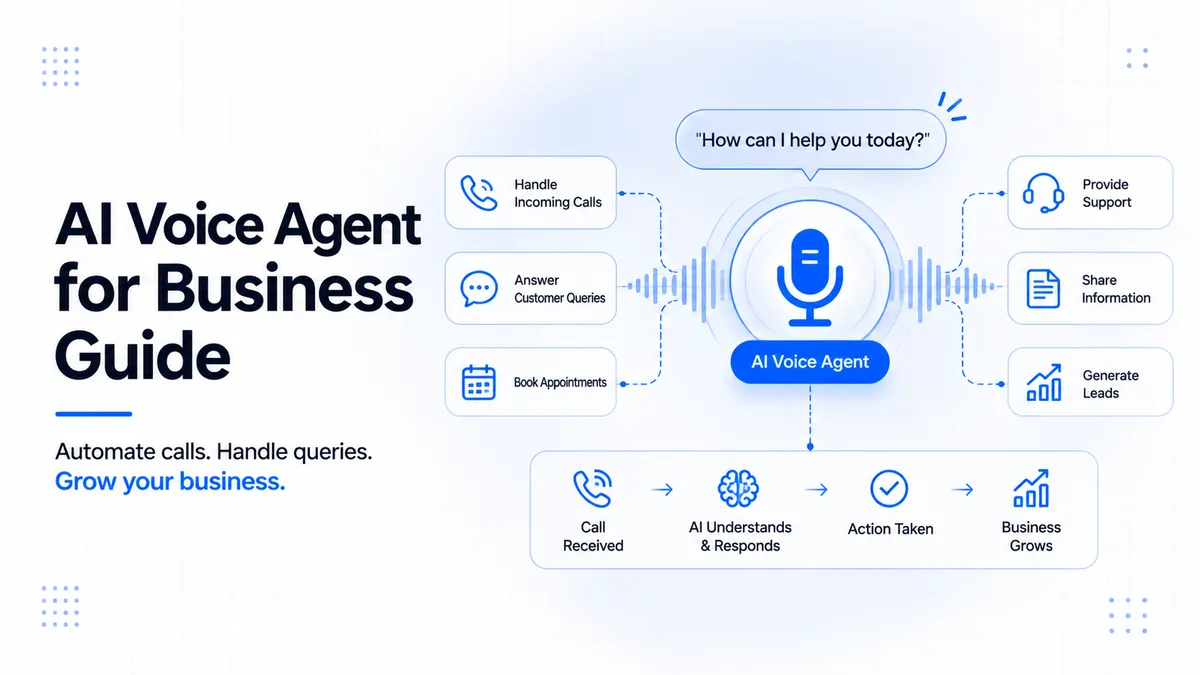
What an AI voice agent is, where it fits, its limits, hand-off to a human, US consent basics and how to start.
· 5 min read
Tell us what’s stuck. We’ll show you what to automate first.
A 30-minute call with the engineer who would build it. You leave with a clear next step, whether or not we work together. We reply within one working day.