WhatsApp Chatbots: What They Actually Do | Stuck Media
What can a WhatsApp chatbot really do for your business? An honest, no hype breakdown of costs, limitations, and when it's actually worth it.
WhatsApp Chatbots: What They Actually Do (And What They Don't)
If you've searched for "chatbot in WhatsApp," you've probably already come across a dozen posts promising it'll replace your entire support team, book meetings while you sleep, and multiply your sales overnight.
We're going to skip that part. Here's what a WhatsApp chatbot actually is, what it can realistically do for your business, and where people usually get burned by expecting too much.
Quick answer: A WhatsApp chatbot is a program connected to your WhatsApp Business account that automatically replies to customer messages without a human involved. It works well for repetitive questions like pricing, order status, and availability, and it typically requires the paid WhatsApp Business API rather than the free app. It is not a replacement for human support on complex or emotional issues, and it needs regular updates to stay useful.
What a WhatsApp Chatbot Actually Is
A WhatsApp chatbot is a program connected to your WhatsApp Business account that automatically replies to customer messages, without a human typing the response in real time.
That's really all it is. It's not a person, and it's not "thinking" the way a human does, even the AI-powered versions. It's following rules, patterns, and trained responses to handle conversations that follow a predictable shape: order status, pricing questions, appointment booking, FAQs, and basic troubleshooting.
There are two broad types worth knowing about.
Rule based bots respond to specific keywords or button clicks. They're cheap and fast to build, but rigid. If a customer phrases something slightly differently than expected, the whole thing breaks.
AI-powered bots use natural language understanding to interpret intent, even with typos, Roman Urdu, or unusual phrasing. They're more flexible and more expensive, and honestly, still not perfect.
Neither type is magic. Both need to be built, tested, and kept up to date.
What It Can Realistically Do
It can answer repetitive questions instantly, at any hour, whether that's pricing, hours, order status, or product availability. It can qualify leads before a human gets involved, so your sales team isn't wasting time on people who were never going to buy. It handles automated order confirmations, reminders, and updates without anyone lifting a finger.
It also collects basic information from a customer (name, order number, complaint details) before handing them off to a human, which saves everyone time. And depending on how repetitive your queries already are, it can cut down the number of messages your support team personally responds to by anywhere from 40% to 90%.
If this sounds like what your business needs, our AI Chatbots for Wholesale & B2B Customer Support handles exactly this — from pricing questions to order status, built specifically for wholesale operations.
Link:AI Chatbots for Wholesale & B2B Customer Support
What It Can't Do, No Matter What You've Read
It can't fully replace human support for complex issues. Refunds, disputes, angry customers, anything emotionally charged or out of the ordinary. A bot that tries to handle these badly will usually make things worse, not better.
It doesn't magically increase sales on its own either. It removes friction and speeds up response time, which can lead to more sales, but it isn't a sales engine by itself.
It's also not something you set up once and forget. Customer language changes, your product catalog changes, new questions come up constantly. A bot that never gets updated becomes close to useless within a few months.
And even the AI-powered ones still make mistakes. They occasionally misread intent or give an unhelpful answer. Whatever you build, make sure there's a clear way for a customer to reach a real person when the bot gets stuck.
The Real Cost
This is usually where people get surprised.
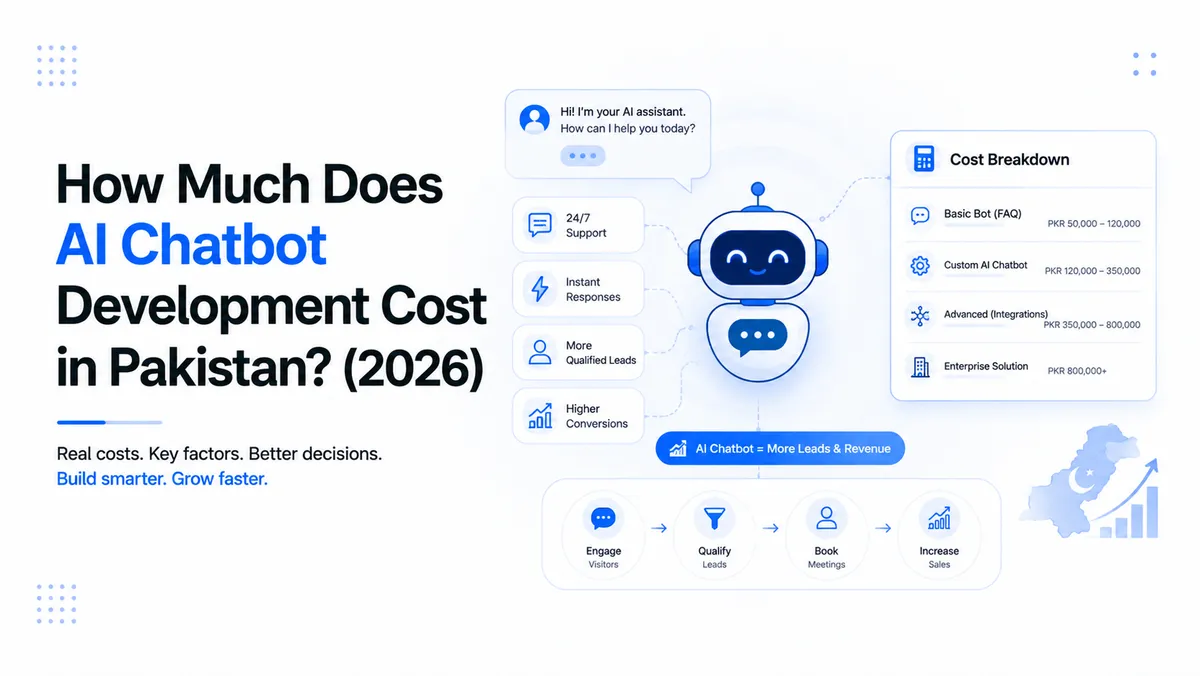
WhatsApp itself doesn't charge for normal use, but running a chatbot through WhatsApp requires the WhatsApp Business API, not the free WhatsApp Business App most small shops use. That comes with a few real costs: a per-conversation fee charged by Meta that varies by country, a platform or development cost to actually build and host the bot logic, and ongoing maintenance since someone needs to update responses and fix what breaks.
Depending on how complex your bot needs to be, a proper setup, not a hacky free template, usually costs somewhere in the low hundreds of dollars per month, plus a one-time cost to build and integrate it. If someone is promising a completely free WhatsApp AI chatbot forever, they're either offering the limited free-tier app with no real automation, or cutting corners somewhere you'll notice later.
If you'd rather skip the guesswork, our Customer Support AI Chatbot is a ready-to-deploy option with transparent monthly pricing.
Link: Customer Support AI Chatbot
When It's Actually Worth It
It makes sense if you get a high volume of repetitive customer questions about pricing, order status, or availability. It also makes sense if your team is spending real hours every single day answering the same ten or fifteen questions, or if you're losing leads because you can't respond fast enough outside business hours. This is especially true for wholesale and B2B businesses, where dealers and retailers are constantly asking about stock, pricing tiers, or where their order is — something we cover in more detail in our guide to AI automation for wholesale businesses.
Link: How AI Automation Works for Business Growth
When It's Probably Not Worth It Yet
If your query volume is genuinely low, a human can already keep up just fine. If most of your customer interactions are complex and relationship-based, needing real judgment rather than quick answers, a bot won't add much. And if there's no one on your team who can review and improve the bot after launch, it'll go stale fast and start causing more frustration than it saves.
The Bottom Line
A WhatsApp chatbot isn't a shortcut to skipping customer service. It's a way to handle the predictable part of your conversations, so your team can spend their time on the part that actually needs a human. Businesses that treat it that way tend to get real value out of it. Businesses that expect it to run itself, understand everything perfectly, and replace their team completely usually end up disappointed, and it's rarely the technology's fault.
If you're thinking about one for your business, start by counting how many of your daily WhatsApp messages are actually repetitive. That number will tell you more about whether it's worth it than any sales pitch will.
Thinking about a WhatsApp chatbot for your business? Book a free 15-minute consultation and we'll tell you honestly whether it's worth it for your specific situation, no sales pitch, just a straight answer.
Read: Best AI Chatbot Tools for Customer Support & Sales in 2026
About the Author
Stuck Media is a knowledgeable contributor sharing expertise and insights on technology and business topics.
Comments
Leave a Comment
Your comment will be reviewed by our team before appearing.
Loading comments...